




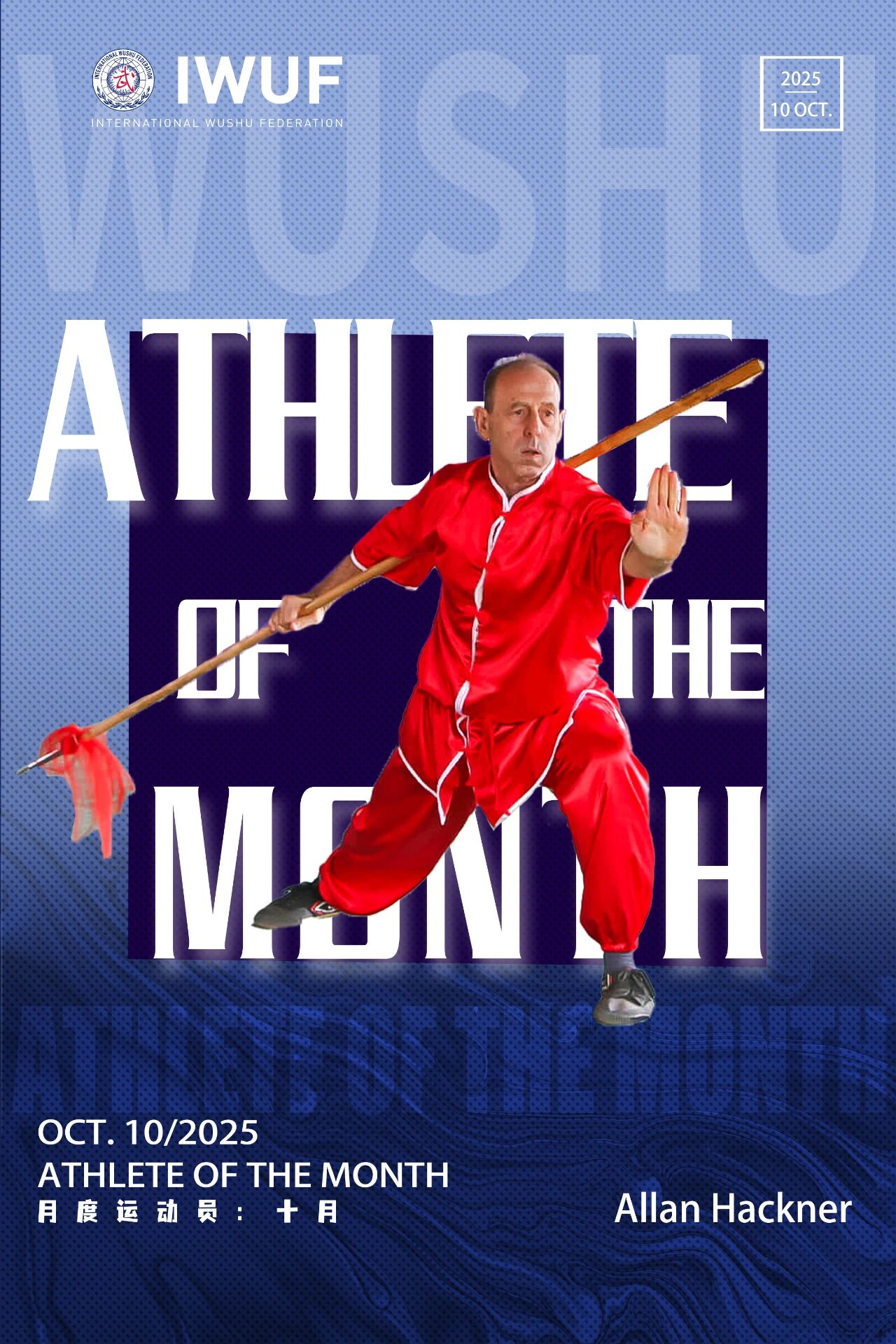
Eighteen years ago South African athlete Allan Hackner suffered a serious neck injury during karate training and was told by his neurosurgeon that if he didn't have surgery immediately his right arm would be completely disabled for the rest of his life, and that he should give up martial arts and take up walking. He didn’t opt for surgery—and instead he started training traditional Shaolin kungfu, Taiji, Sanda and Qigong in Johannesburg. His damaged nerves began to awaken, and today he is fully recovered. He says for him, kungfu is a gift. Allan’s inspiring story of courage and perseverance chronicles an odyssey of martial arts experiences, obstacles and triumphs. Over the past 10 years Allan has competed and won gold medals in numerous South African Wushu Federation (SAWF) National Championships and Trials. In 2018 he competed in the 14th Hong Kong International Wushu Competition and was awarded two gold medals, and in 2025 he competed in the 10th World Kungfu Championships as a member of the South Africa National Protea Team, winning a second category prize and a bronze medal.
A Winding Path of Fate from Karate to Kungfu
Allan Hackner was born in Durban, South Africa, and is now 64 years old. ”Durban,” he notes, “is a coastal city on the Indian Ocean and when I was growing up, I spent most of my spare time surfing. When I was around thirteen or fourteen years old, I went to a karate class with a friend who had a junior black belt in karate. I really enjoyed the class and wanted to take up karate lessons, but my parents wouldn’t let me, thinking it would interfere with my schoolwork! But my fascination with martial arts never left me, especially after watching Enter the Dragon at a cinema in around 1974.”
Allan completed his undergraduate degree in psychology and sociology at the University of Kwa-Zulu Natal (KZN), Durban, travelled for a year overseas, and returned to Durban in 1984 to complete a master’s degree in Town and Regional Planning. There he joined the Japanese Karate Association (JKA) Shotokan Karate school at the university, and says, “I was hooked. After completing my master’s degree, I spent two years living in Jerusalem working at the Centre for Planning in Historic Cities. I lived in Jerusalem for two years from 1987 – 1988 and trained at a karate school in the city. I also used to travel quite a bit for work and would train in different kungfu schools for a day or two whenever I could. I returned to South Africa in 1989 and moved to Johannesburg for work. I joined the JKA Shotokan Honbu Dojo (headquarters) in Johannesburg and in 2004 I was awarded my 3rd Dan (third level black belt).”
A Shocking Life-Altering Event
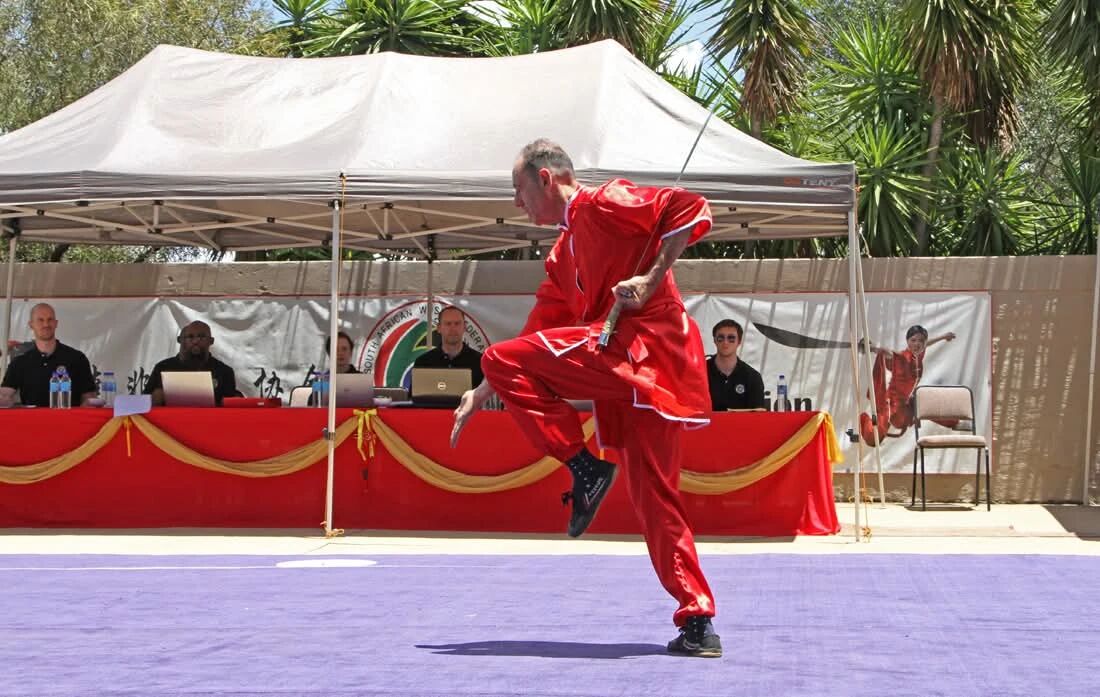
Allan’s training continued, and his skills and experience increased. Until suddenly everything changed. Allan vividly recalls, “One day during Jiyu Kumite (free sparring) with a 5th Dan karateka I received a punch to my chin. I felt a shockwave down my spine. Initially I did not think much about the blow, except being impressed by the speed of my opponent.”
A few days after the incident Allan started to feel a deep gnawing pain under his scapular. “I consulted with an orthopedic surgeon,” he says, “and he admitted me to hospital for traction to my neck, and pethidine injections for the pain, but with no clear diagnosis. I checked myself out of hospital the next morning as we had made plans to go on holiday with the family.”
Two weeks after returning from their vacation, Allan’s wife noticed that his pectoral muscles, triceps and latissimus dorsi muscle (lats) on the right side of his body had atrophied significantly. Allan says, “I made an appointment to see a sports physician, and he suggested I have an MRI scan. After examining the scan, the physician said that I had one of the largest C6/C7 herniated discs he had ever seen, and he referred me to a neurologist to conduct an electromyography to assess the nerve innovation to the muscles. He told me there was almost no nerve conductivity going to the affected muscles and referred me to a neurosurgeon.”
A Frightening Diagnosis – And an End to Martial Arts?
After reviewing the MRI scan and reports the neurosurgeon asked Allan to do a standing push up against the wall with his right arm. “I couldn’t,” he says. “He told me that I needed to have surgery immediately -- discectomy and spinal fusion -- to relieve the pressure that the herniated disc was placing on the nerve. If I did not have surgery, I would be lame in my right arm for the rest of my life. He assured me that after surgery I would be back at training in a couple of months, saying that he had recently performed a similar operation on an athlete doing mixed martial arts (MMA) who was back in the ‘cage’ competing just six months after surgery. I decided I wanted a second opinion, but it would take me another three months to get an appointment to see the second neurosurgeon.”
In the interim the pain intensified, Allan recalls, and he began to experience extreme pain in his neck, shoulder, and down his right arm, with numbness in his hand and fingers (radiculopathy). He started living on a cocktail of self-prescribed pain killers. “When I got to consult with the second neurosurgeon,” Allan says, “he told me that it would be pointless having surgery to address the muscle atrophy as the nerve damage would have already happened within two weeks of the initial injury, but that surgery could help relieve the pain. He said he couldn’t predict if the muscle and nerve damage would ever recover or how long it might take. He recommended that I never take part in any high impact or contact sports and that I should take up walking instead. He prescribed an antiepileptic medication (off label) for pain management to calm muscle spasm and nerve activity. After a couple of weeks, I decided to stop the medication cold turkey, and experienced severe withdrawal symptoms. I started a long journey of rehabilitation - bio kinetics, physiotherapy, acupuncture, chiropractic, and meditation. It was the most difficult period in my life!”
Dark Days Turn to Light with Kungfu
The rehabilitation saw some dark days in Allan’s life as he struggled to regain his health, mental balance, and physicality. Then, something short of a miracle turned up. It was kungfu. “One day, about 24 months after my initial injury,” Allan remembers, “a work colleague told me that he was learning Taiji with a Shaolin monk who had opened a kungfu school in Johannesburg after bringing the international show ‘Wheel of Fire’ to South Africa. I thought that taking up Taiji might be good -- it would be low impact, get me moving, and after all Taiji is a martial art! I didn’t know very much about Taiji or kungfu at the time. When I first met with Shuaimeng Liu, now my teacher, he could barely speak any English. I tried to explain to him about my injury and that I wanted to learn Taiji to help with my recovery. He asked me to show him some karate moves. He looked at me for a while and then said “No! You will learn Shaolin Kungfu!” My heart leapt with joy!”
And so Allan found himself practicing the ancient traditions of Shaolin kungfu, Chen Taiji, Qigong, and later Chinese calligraphy and sanda. He describes poetically these experiences as, “moving like a beam of light, flying like lighting, striking like thunder, whirling in circles, rolling, falling, jumping, and flowing like water. Slowly, day by day, millimeter by millimeter my damaged nerves began to awaken, growing new pathways through my body. My strength finally began to return.”
Evolving as a Martial Artist -- A New Path with Shaolin
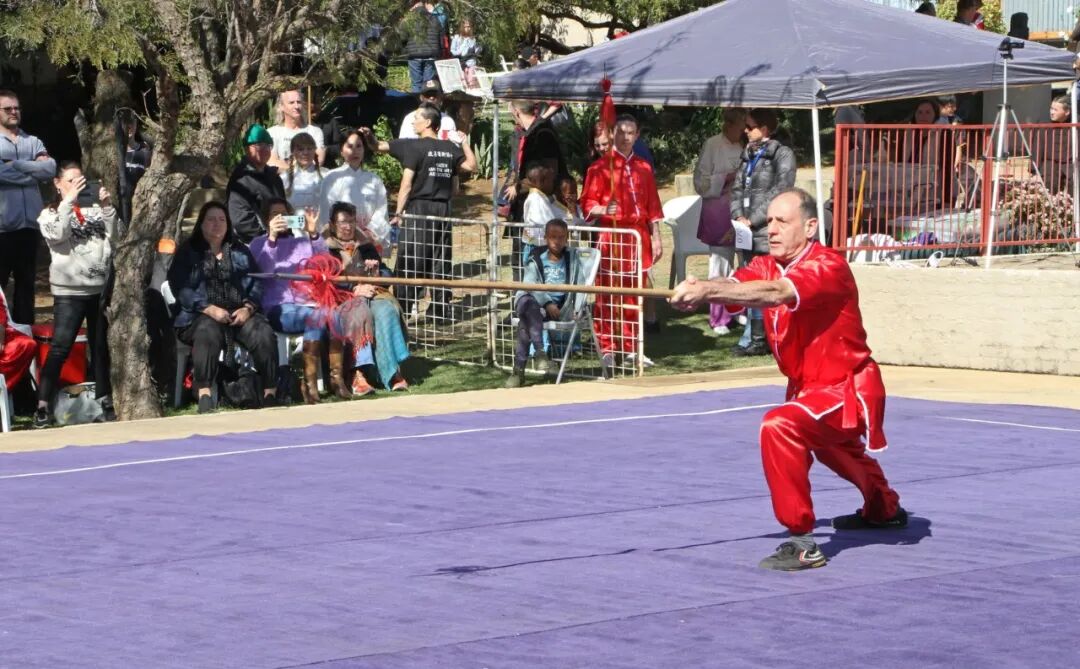
Allan is cognizant of how lucky he was to find a series of excellent instructors along the road of his martial arts journey. “Finding a dedicated, knowledgeable, and skilled teacher is key to understanding the foundations, principles, and spirit that define any traditional martial art,” he states, “and I was fortunate to have exceptional teachers throughout my karate years and now with Shuaimeng Liu. Having a strong karate background did help with my balance, coordination, flexibility, strength, and power, but I also had to learn to adjust to the more circular, flowing, and up and down movements characteristic of Chinese martial arts.”
“In my first five years of kungfu training,” Allan continues, “I avoided learning sanda as I was afraid of reinjuring my neck and instead focused on Shaolin, Qigong, and Taijii. When I started learning sanda, I had to learn to stop pulling my punches to avoid full contact and not to pause after scoring a point, but to continue fighting until the end of a round, which required much greater stamina than I needed for karate. Learning to use weapons, such as the Dao (broadsword), Gun (staff) and Qian (spear) also added a completely new dimension to my martial arts experience. I believe that learning the Dao with my right hand was also instrumental in speeding up my recovery!”
We asked Allan what is it about each of the very different kungfu disciplines he practices that appeals to him? He answers, “I enjoy the explosive energy, speed, and power of Shaolin kungfu; the flowing controlled calmness and dynamic interplay of internal and external energy in Taiji; the playful sparring, sharpened reflexes, aerobic intensity, and practical self-defense of sanda; and the deep cultivation of internal energy, and healing benefits of Qigong. Though these may appear as distinct disciplines, their boundaries are fluid and often overlap in practice. I do Shaolin and sanda more for the sport, but all the disciplines have their health benefits.
Allan adds, “I believe that self-defense is a fundamental skill that all martial artists should learn. Sanda blends traditional kungfu techniques with full-contact fighting, including punches, kicks, throws, and takedowns, and showcases the practical side of Chinese martial arts in a competitive format.”
Winning Gold in South Africa
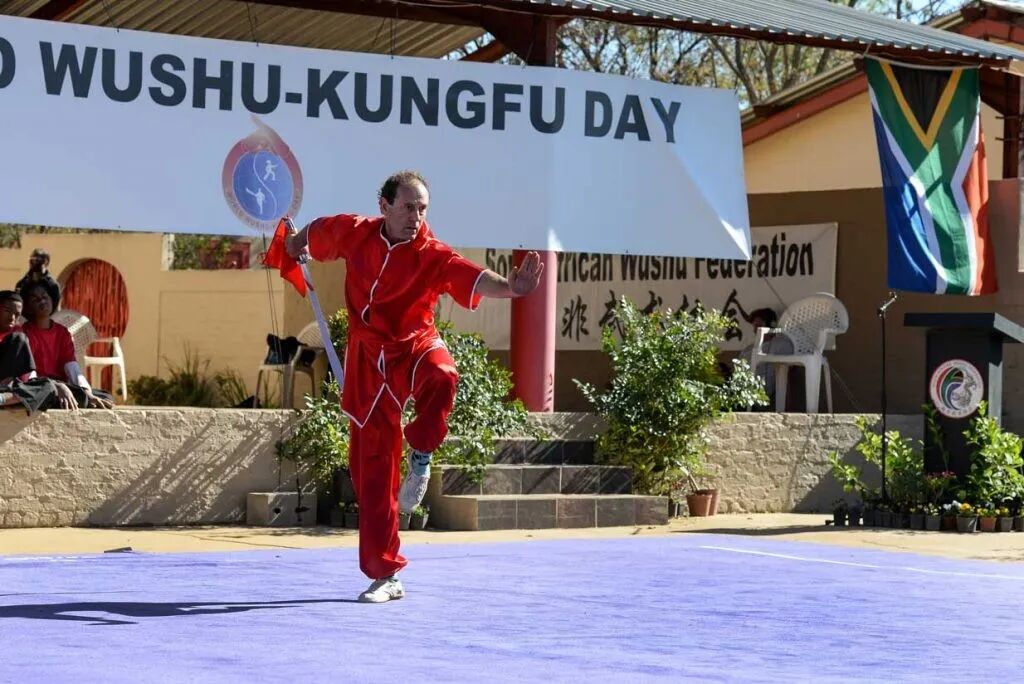
In his earlier years Allan competed in a few local karate competitions. “When I started kungfu I competed in our annual school competitions, at the Shuaimeng Liu Martial Arts (SMA) Centre,” he says. “After a few years, as the school began to grow, the school joined the South Africa Wushu Federation (SAWF) and we started competing at the annual SAWF National Championships and Trials. I have always focused on Shaolin kungfu at these events, where I have performed barehand routines, such as Shaohon Quan, Tombei Quan, Laohon Quan and Pao Quan, and weapon forms such as Shaolin Staff, Broadsword and Spear. I didn’t perform particularly well at the outset, but over time my routines and scores at these national events have improved.”
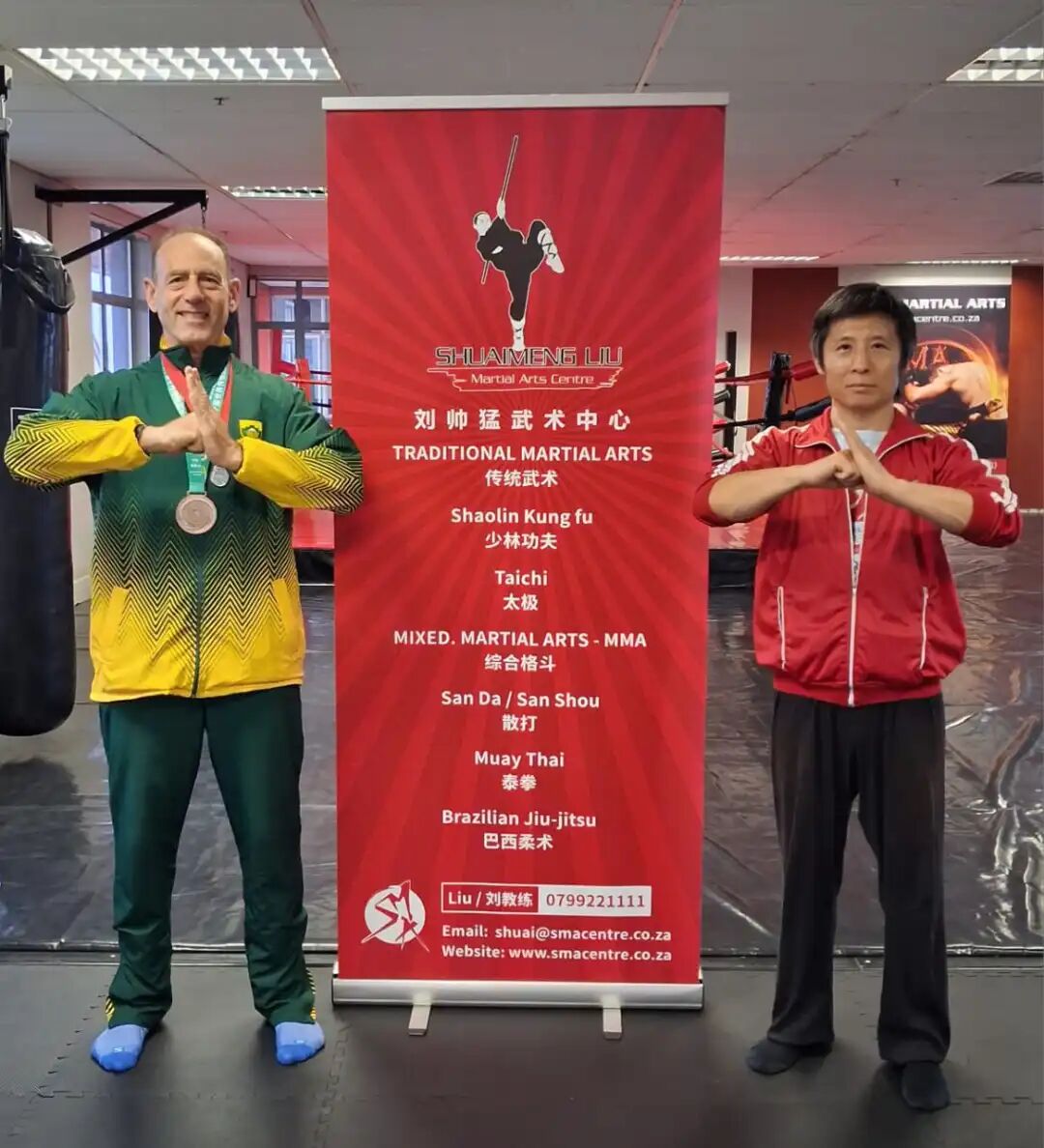
Through consistent practice and hard work, Allan would eventually come to win gold medals in numerous South African Wushu Federation (SAWF) National Championships and Trials. “Setting the goal of winning a gold medal is a strong motivator for me,” he says, “when training for competitions. But while winning gold is gratifying, I know it doesn’t mean that I am the best, or even that good. Watching the performances of elite athletes at the recent 10th World Kungfu Championships was a clear reminder of this, and a source of inspiration to keep improving and growing.”
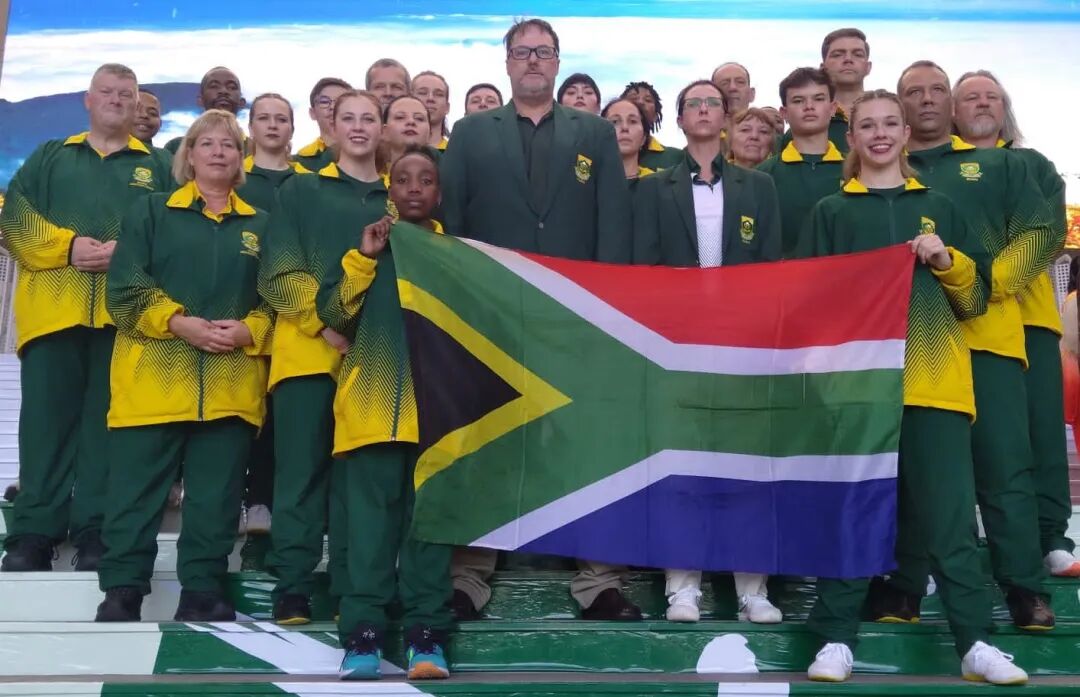
Allan recalls that when his school first began competing at SAWF events they were ‘the new kid on the block’ and brought a lot of fresh energy to the competition landscape. “Over the years,” he notes, “we have built a strong comradery with the other schools and athletes and while everyone is competitive the events are a celebration of wushu in South Africa. Over the past two years SAWF has introduced provincial championships, and athletes must now first be selected for the provincial squad to qualify to compete in the national championships. This should help the sport grow and improve the standard of athletes competing at the national and international levels.”
Winning Gold at the 14th Hong Kong International Wushu Competition
The 14th Hong Kong International Wushu Competition in 2018 was Allan’s first international competition. He remembers, “Over 2,500 athletes from more than 180 teams worldwide competed. I was very excited and nervous. I was joined by two other athletes from my school who were also awarded gold medals for their Taiji routines. I performed two Shaolin routines, Tombei Quan and Qiang. After winning my first international gold medal I remember sitting down, taking a deep breath, and thinking about the neurosurgeons who told me I would be lame for the rest of my life if I didn’t have surgery immediately, or that the only physical activity I should do in the future is walking!”
Debut with South African Team at the 9th World Kungfu Championships
In 2023 Allan would travel to Emeishan for the 9th World Kungfu Championships. “It was my first time competing at the IWUF World Kungfu Championships,” he says, “and it was quite an overwhelming experience with over 6600 participants from 53 countries and regions. The South Africa Protea team comprised 16 athletes with 7 athletes from my school, SMA Centre. The team brought home 9 bronze medals and 7 silver medals. I competed in Louhan Quan and Shaolin Broadsword, but I didn’t come away with any medals. The South Africa National Protea Team was led by SAWF President and National Protea Coach, Jurgens Lambrecht, and had athletes from different schools and regions across the country.”
“To acclimatize and prepare for competition the team trained twice a day in the Boauguo Village square,” Allan recalls, “which helped build team spirit and ensure everyone stayed focused on the competition. The atmosphere in the competition arena was electrifying with thousands of athletes from all over the world rehearsing their individual and group routines in the practice area while roll-call was being carried out, colorful trains of athletes being escorted by officials up the escalators to the competition area, and national teams shouting war cries and cheering on their team-mates wearing beautiful outfits performing their routines on the floor!”
A Return to Emeishan – And Medals
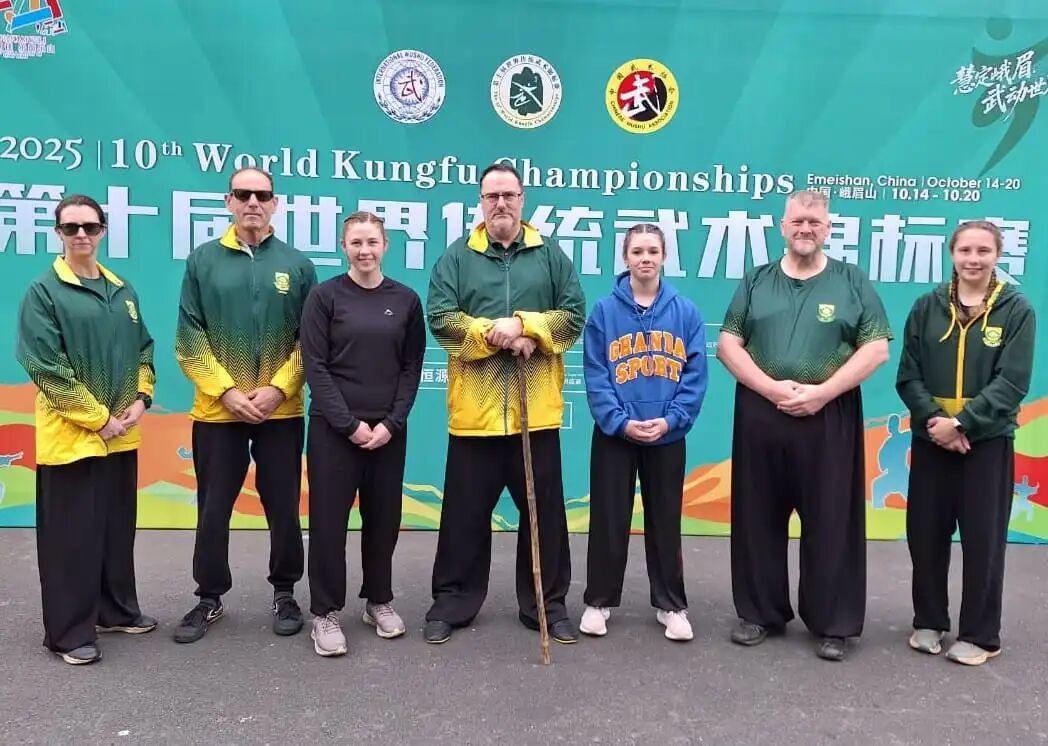
Allan recently returned to Emeishan for the 10th World Kungfu Championships where he would level up competitively to win a silver and a bronze medal. This time experience paid off. “It was exciting to return to Emeishan for the 10th World Kungfu Championships,” he says, “where everything felt very familiar. The South African National Protea Team returned to the luxury Hong Zhu Shan Hotel, located on a beautiful lake at the foothills of Mount Emei. Surrounded by forests, the hotel is within close walking distance of the Baoguo and Fuhu Temples, as well as the small shops and restaurants in the village. It was incredible to watch the Mount Emei Scenic Area transform into a kungfu mecca, with athletes from all over the world, dressed in their national tracksuits, walking the streets and practicing their routines around the village.”
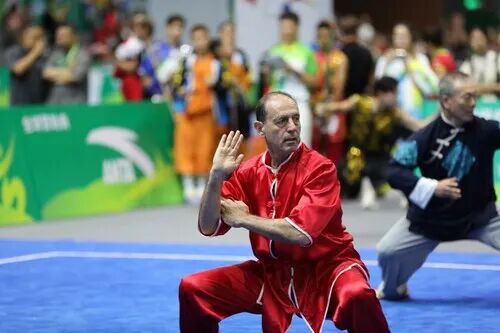
He continues, “Once again, the team arrived five days early and trained daily, two hours in the morning and two in the afternoon, in final preparation for the competition. But getting to this point was built on many years and countless hours of dedicated training by each team member before they were selected to represent South Africa at the Championships. I competed in the Seniors Division (60 years plus) and chose Pou Quan and Shaolin Qiung as my competition routines. I was awarded third place and a bronze medal for my Pou Quan routine with a score of 8.72 and fourth place and a ‘second prize’ silver medal for my Qiung routine with a score of 8.6. Pou Quan is a traditional Shaolin routine and can be translated as ‘Cannon Fist’ which reflects the explosive force of the movements. It was great to reconnect with a few of the athletes I competed with at the 9th World Kungfu Championships. Even though we did not speak the same language, I felt a bond with them through our shared passion for kungfu. Other members of the South African team also forged new friendships with athletes from around the world, swapping national flag badges and Instagram addresses. With over 5,000 athletes and 54 countries taking part, it was exhilarating to watch the athleticism, speed, power and beauty of the different routines and I came away feeling that I have so much more still to learn.”
Beauty, Power and Philosophy of Shaolin Kungfu
We asked Allan, why Shaolin? He explains, “I am drawn to the hard, disciplined, and traditional approach to training that is rooted in the 1,500-year legacy of the Shaolin Temple and the underlying philosophical influences of Daoism, Buddhism, and Confucianism. I also enjoy the variety of bare-hand and weapon routines, the emphasis on flexibility, agility, speed, and power, the interplay between hard and soft, fast and slow, and the dynamic between external force and internal energy.”
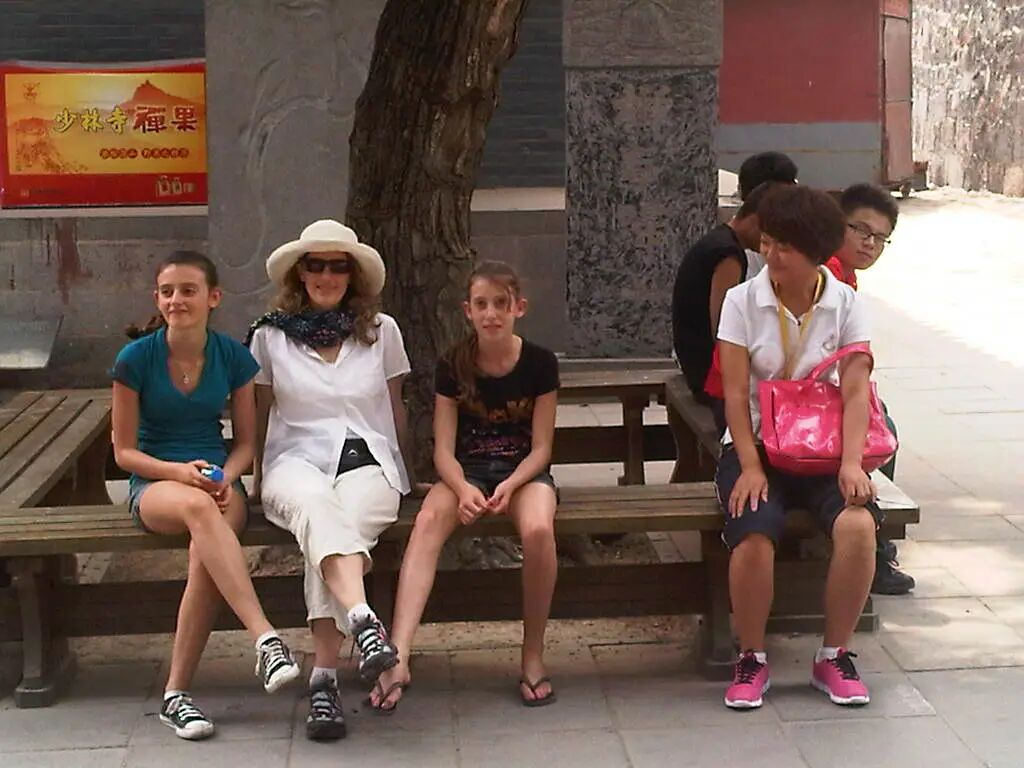
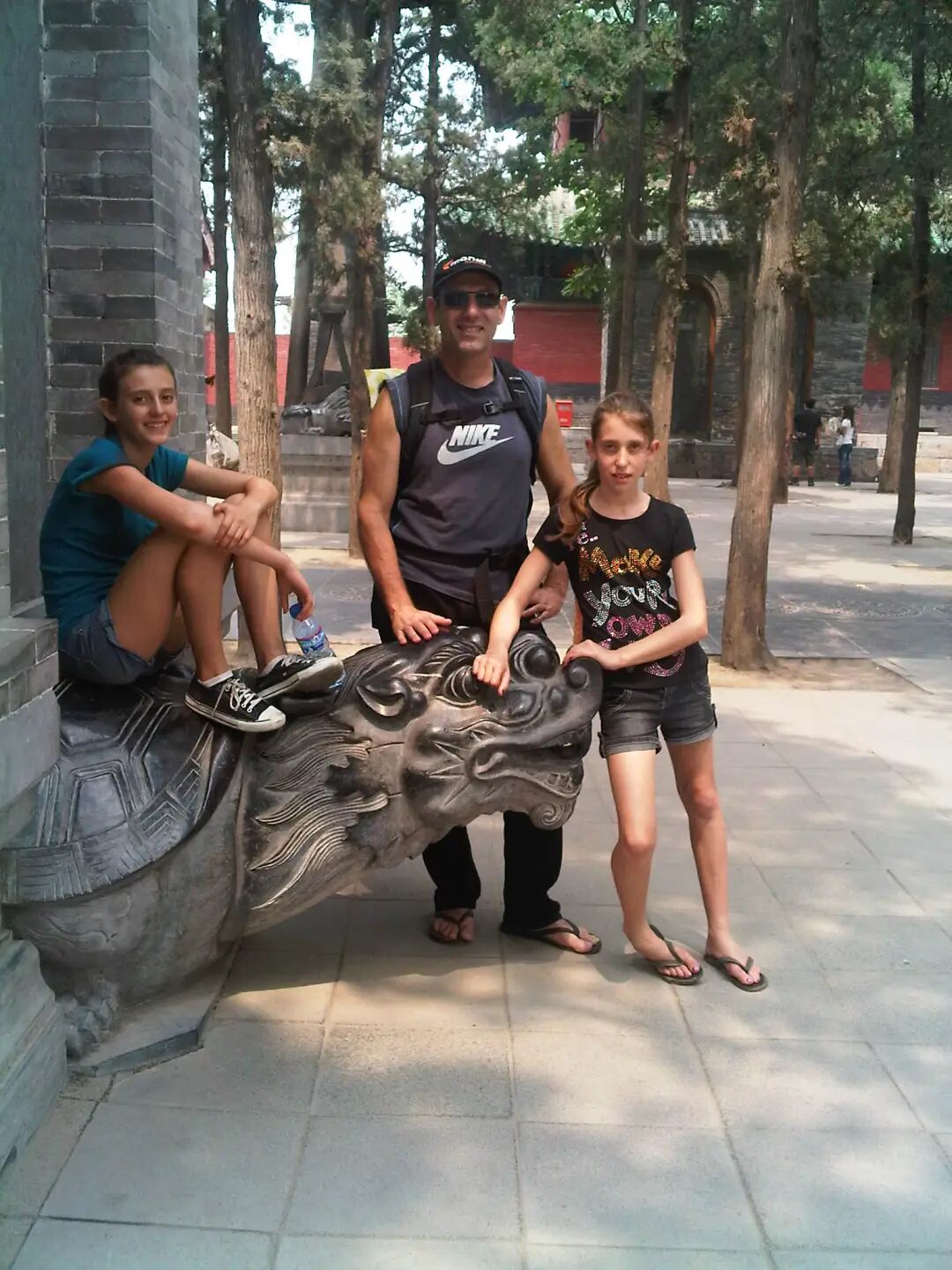
“In 2010,” Allan adds, “I had the privilege of visiting the Shaolin Temple with my wife and our daughters, then twelve and fourteen. The Shaolin Temple is at the foothills of the Song Mountains (Songshan) in Dengfeng, a city which hosts over 60 Kungfu schools, training more than 60,000 martial artists, making it one of the most concentrated centers of martial arts in the world. Everywhere one looks, squads of martial artists are training in schoolyards, running up and down the streets, and every other shop is selling weapons and kungfu outfits. After touring the Shaolin Temple and watching gravity-defying performances, we attended a sound and light show that told the history of the Temple against the backdrop of Songshan. It was an unforgettable experience.”
Taiji and a Deeper Dive into Qigong
Allan was initially drawn to Taiji and qigong for their healing attributes. “When I first joined SMA Centre,” he says, “I learned the short Chen Style Taiji bare-hand routine and began studying the Taiji Jian form. But these days, my training is mainly focused on Shaolin, sanda, and Qigong, though I do return to Taiji now and then, especially when recovering from some new injury.
Daily Training
We asked Allan what his normal training routine is like. He says,”In total, I train for about 13 hours a week, which includes team training and private lessons with the head coach, and teaching Shaolin, Qigong, SanThai (a blend of Sanda and Muay Thai techniques), and Wuxian. Wuxian is a self-defense system developed by Shuaimeng Liu that draws from the most effective techniques across multiple disciplines, including Shaolin Kungfu, Chin Na, Taiji, Sanda, Muay Thai, and Jiu-Jitsu. My overall training schedule remains unchanged during major events, but the focus of team classes shifts towards competition preparation.”
Wushu in South Africa
We asked Allan how he sees wushu/kungfu developing in South Africa. “The main goal of the South African Wushu Federation (SAWF),” he replies, “is to actively grow wushu/kungfu within South Africa, with a particular focus on reaching people from previously disenfranchised areas. According to SAWF Secretary General, Tammy Davey, the SAWF has made significant progress over the years in this in this regard. However, given the current economic challenges facing the country, the impact is being felt across all sectors, including the SAWF and its members. While the Federation has successfully introduced wushu/kungfu to many communities and seen a remarkable rise in interest, it has not always been able to follow through due to limited resources for training sufficient instructors.”
“Despite these challenges,” Allan adds, “the SAWF remains committed to intensifying its outreach efforts. It is encouraging to see the wide variety of kungfu styles registered with the Federation and the continued growth of development schools. Each year, the SAWF successfully hosts Provincial and National Championships and continues to send strong wushu/kungfu teams, officially representing South Africa, to China and other countries to compete in various IWUF World Championships.”
Balancing Kungfu and Life
In balancing his kungfu and life, Allan has total support from his family. “My wife practices Chen Style Taiji,” he says, “and both my daughters trained in modern wushu for several years, one of them winning gold medals at the SAWF National Championships and Trials. They are very supportive of my training and proud of my achievements.”
Allan adds, “I worked at the United States Agency for International Development (USAID) for over twenty-four years, designing and managing regional trade and investment programs aimed at promoting inclusive economic growth, job creation, and poverty reduction across Southern Africa. USAID was dismantled earlier this year, and I am currently working as a private consultant in this field. Outside of Wushu, I enjoy gym, yoga, and trail running. I also enjoy spending time with my wife on multi-day hikes in the mountains and wilderness areas of South Africa.
Kungfu Philosophy and Dreams
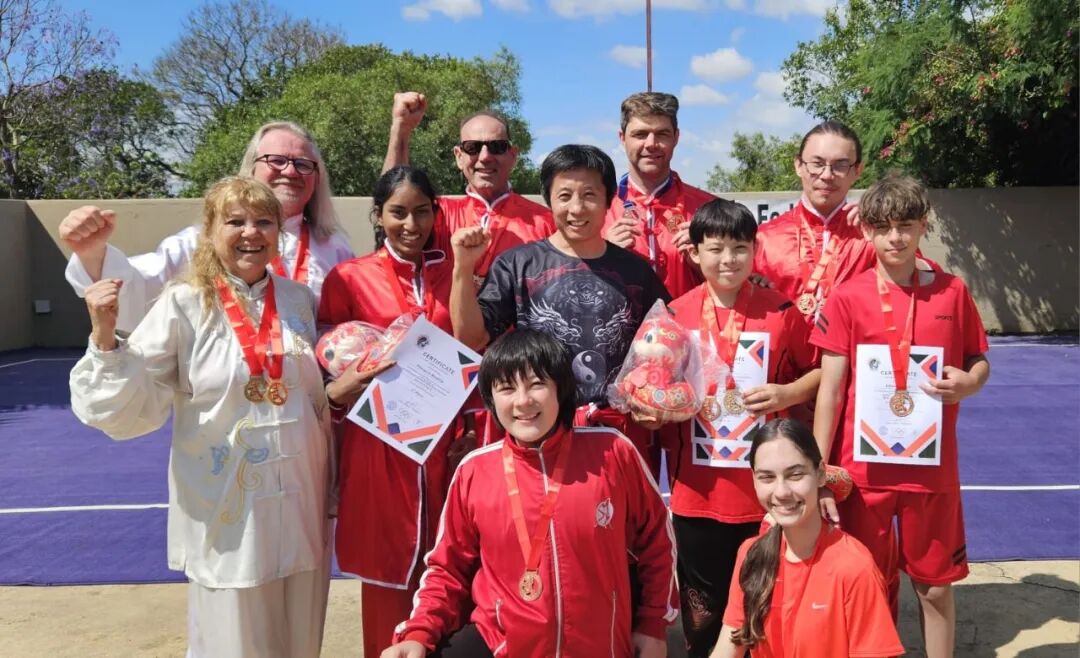
“My dream,” Allan says, “is to open a holistic health centre in Cape Town, South Africa, focused on rehabilitation and recovery, supporting people healing from sports injuries, spinal conditions, post-surgical procedures, strokes, and stress-related or mental health challenges. The studio would offer kungfu and Qigong as part of the recovery process as an adjunct to conventional therapies and treatment.”
“Being a kungfu athlete,” he concludes, “helps me stay fit, healthy, and young at heart. It has connected me with people of all ages, backgrounds, professions, and cultures, enriching my life experience. Through international competitions, I’ve had the opportunity to travel, meet practitioners from around the world, and learn about diverse cultures and martial arts traditions. I feel part of a global community connected by a shared passion for martial arts.”