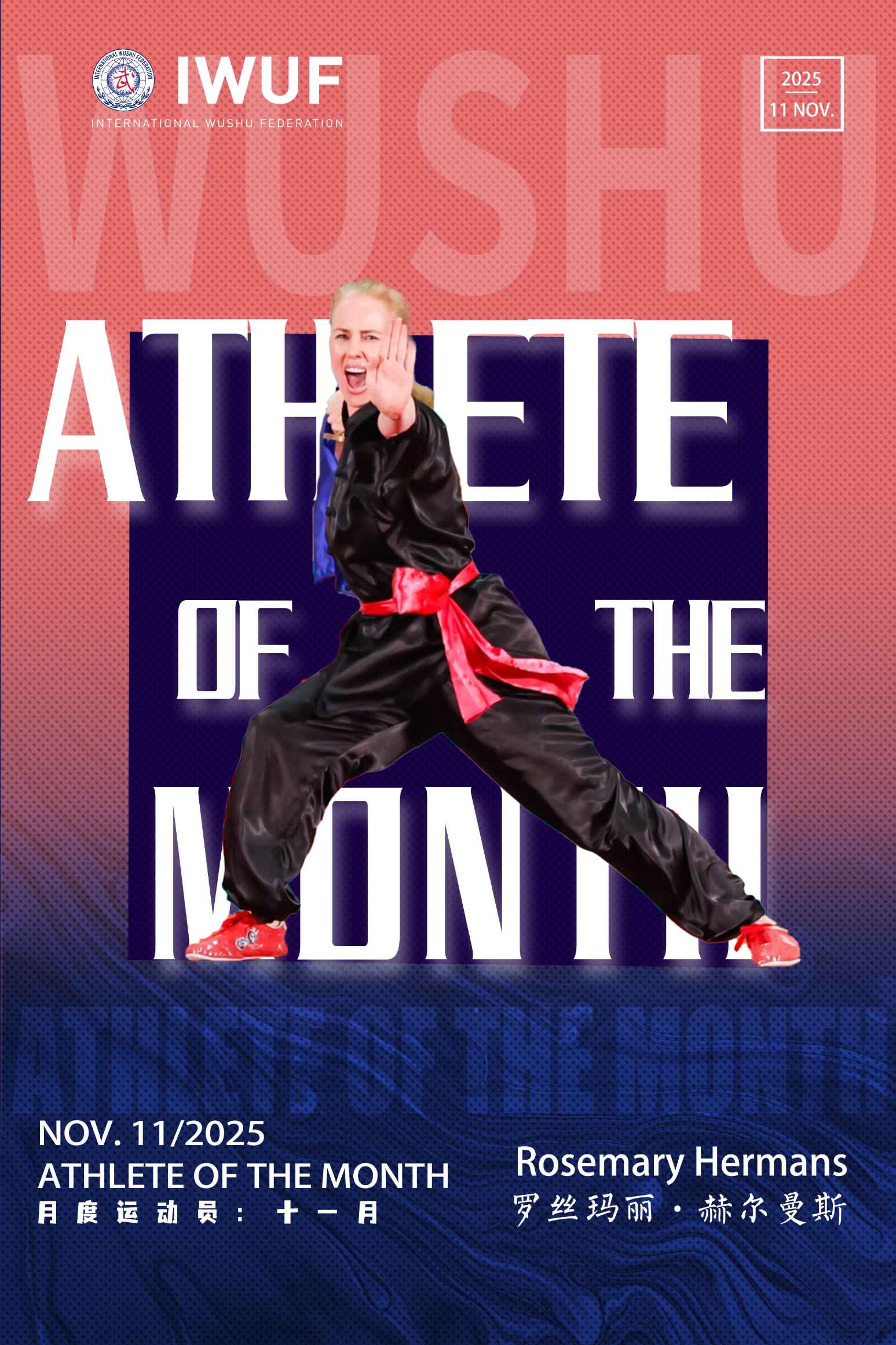





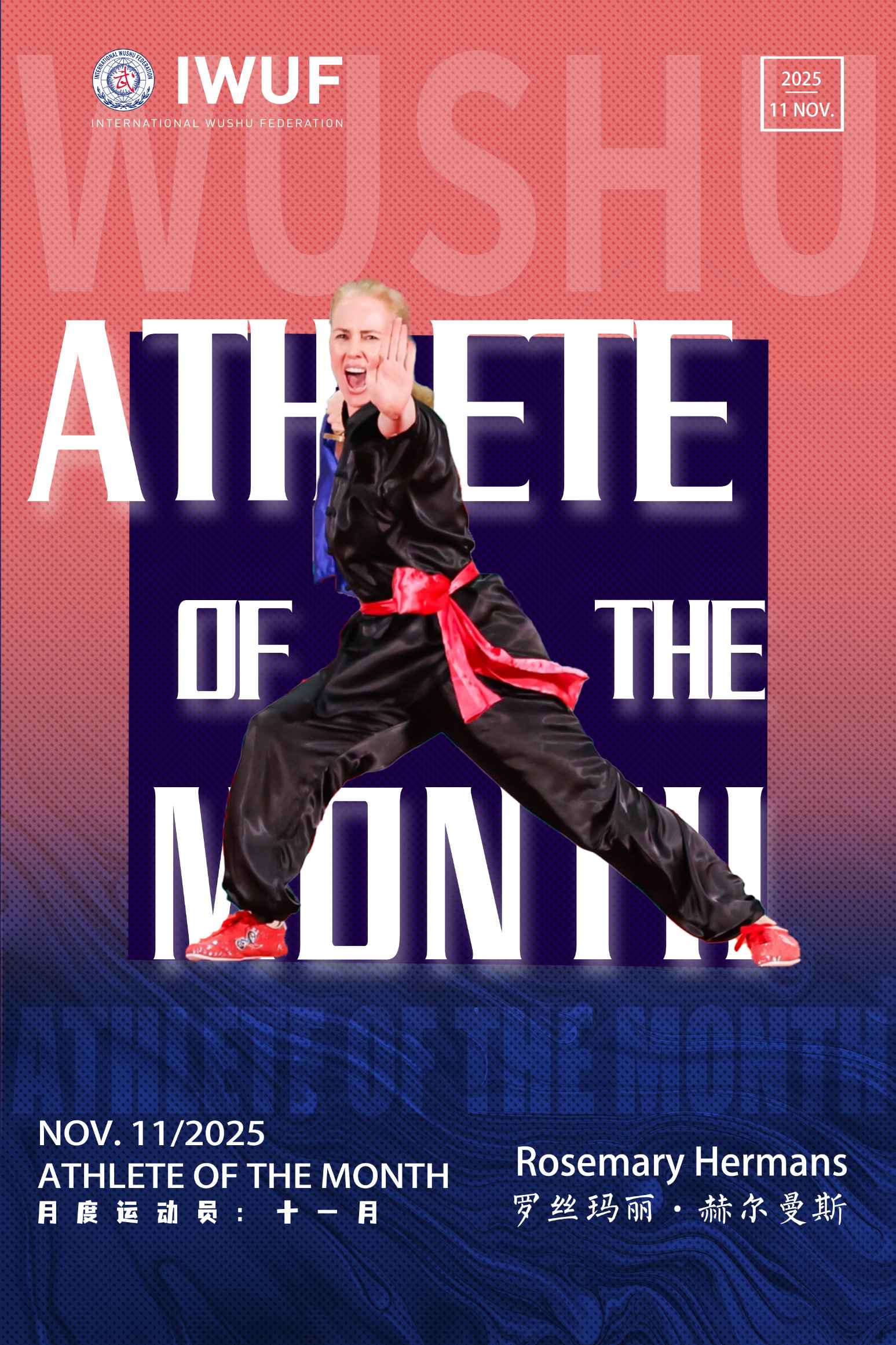

Nineteen years ago, Rosemary Hermans walked into her first kungfu class looking for a new challenge -- and discovered a lifelong passion. Since that day, she has trained with consistency and determination, mastering barehand forms and a range of traditional weapons. Her first love was the broadsword, later evolving into the sword, and she continues to explore new weapons with enthusiasm. As a dedicated competitor, Rosemary has held Australian Champion titles for over a decade since first competing in 2014. This year, she achieved a career milestone by winning her first place at the 2025 World Kungfu Championships. For Rosemary, wushu represents the perfect harmony of strength, discipline, and art, and she values how the sport keeps both mind and body sharp. She believes that wushu can be adapted to suit every stage of life and level of fitness, and she takes pride in showing that wushu is truly for everyone—young or old, beginner or master. Her transformative journey continues to inspire others to train with dedication, express themselves through movement, and find beauty and balance in the art of wushu.
Wushu Beginnings
Rosemary Hermans, 52, hails from Melbourne, Australia. She recalls, “I first discovered kungfu during a very transitional time in my life. I had been working as an aid worker in a war zone in Africa when younger and also loved travel, and both those experiences made personal safety feel incredibly important. Additionally, I had always participated in sport but I had hit a point where you’re searching for some new challenges. After having my daughter, and carrying some extra weight, I knew I needed a new chapter - something that would strengthen my body, sharpen my mind, and teach me to protect myself. So I searched for a martial arts school close to home, and that’s how I found Golden Lion Academy.”
From her very first class, Rosemary says, everything changed. “The weight started to fall off, but more importantly, I was excited by this martial art. Kungfu challenged me in ways I didn’t expect - the coordination of left and right, hands and feet, was quite the test. It was difficult, humbling, and strangely addictive. I was absolutely hooked!”
The discovery of the breadth of kungfu offered a whole different world of sport. “What captivated me was the variety,” she states. “Barehand forms, traditional weapons, self-defense, conditioning. Every session was different, and every challenge sparked some excitement. I loved that kungfu demanded technical precision, mental focus, and physical fortitude all at once. What first appealed to me -- and what still inspires me today -- is that kungfu doesn’t just build strength. It builds discipline, calm, resilience, and a deep sense of personal power. It gave me back control of my body, my confidence, and ultimately, my identity.”
Rosemary believes that her early training was all about consistency and commitment. “I trained three times a week without fail at a minimum,” she says, “and I complemented my kungfu with long walks and regular gym sessions to build strength, endurance, and balance. Those early years taught me that progress in wushu isn’t just built in the training hall, it is built in the discipline of everyday life.”
Falling in Love with the Sword – A Singular Joy of Life
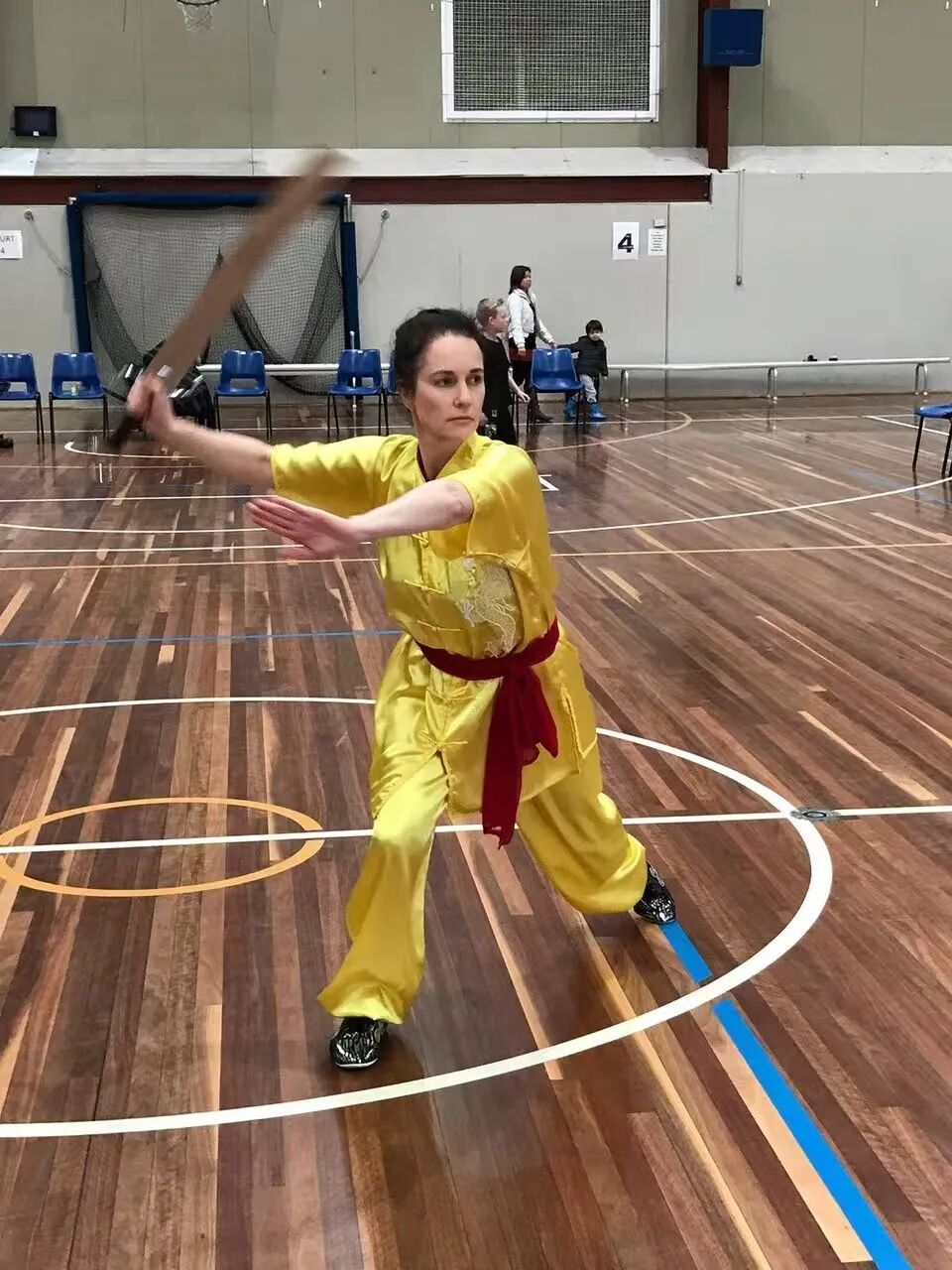
Rosemary, contemplating her journey, recalls, “From the beginning, I was drawn to the rich diversity of wushu, but one discipline captured my heart completely: the sword. For over a decade, I focused on nandao (southern broadsword), learning its powerful, grounded movements and deep stances. Eventually, I transitioned to sword, and it felt like discovering a whole new language and a whole new style.”
“There is something almost meditative about holding a sword,” Rosemary adds thoughtfully. “The moment it’s in my hand, the world becomes quiet. It’s as if the movement, the rhythm, and the energy pull me into another place entirely. Sword training is, without question, one of my greatest joys in life. If I had to choose a favourite discipline, it will always be the sword. It is where I feel most alive, most focused, and most connected to the art.”
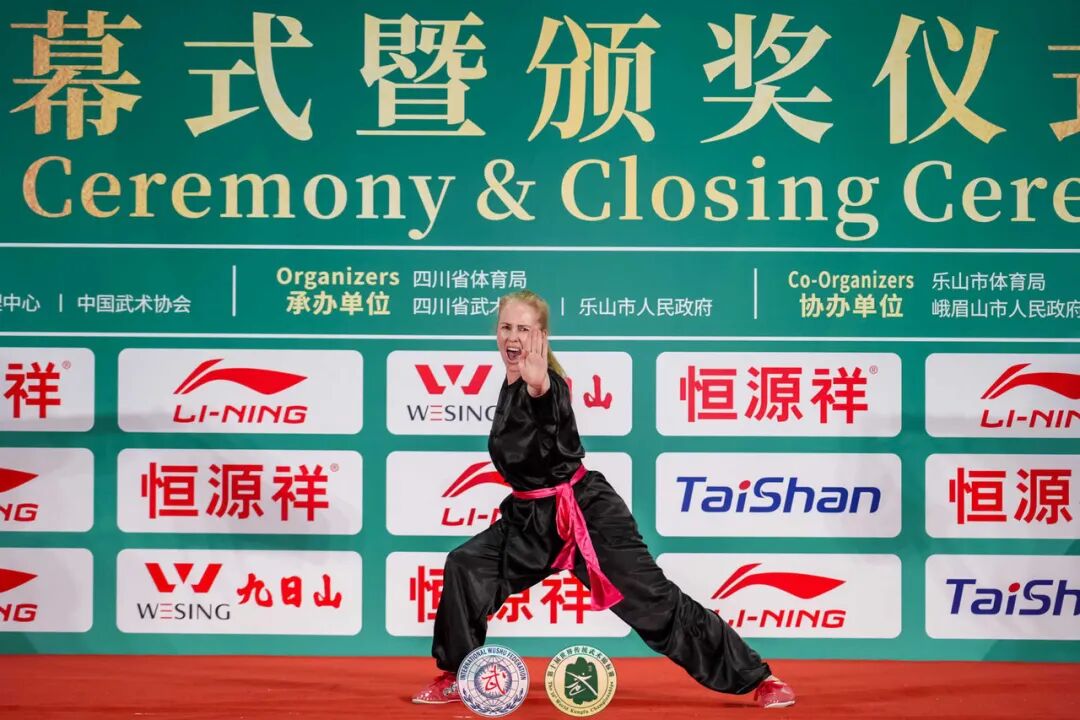
“Over the years, I have trained in both southern broadsword and sword , and more recently, I’ve been learning the twin sticks for my next grading. I also hope that one day I’ll have the time to add the spear to my repertoire. Weapons training pushes coordination, focus, and creativity in ways that suit my personality. Everyone should find something that brings out your strengths and speaks to your own identity.”
Early Competition – From Terrifying to Triumphant
Rosemary looks back on her jump off into wushu competition. “I began competing almost thirteen years ago,” she says, “which was around six years after I started classes, and, to be honest, competition terrified me at first. But that fear was also the reason I kept showing up. Competition pushes you to refine your forms, sharpen your technique, and train with a level of focus you don’t always find in regular classes. It’s like a deadline for work or study; it makes you up your game!”
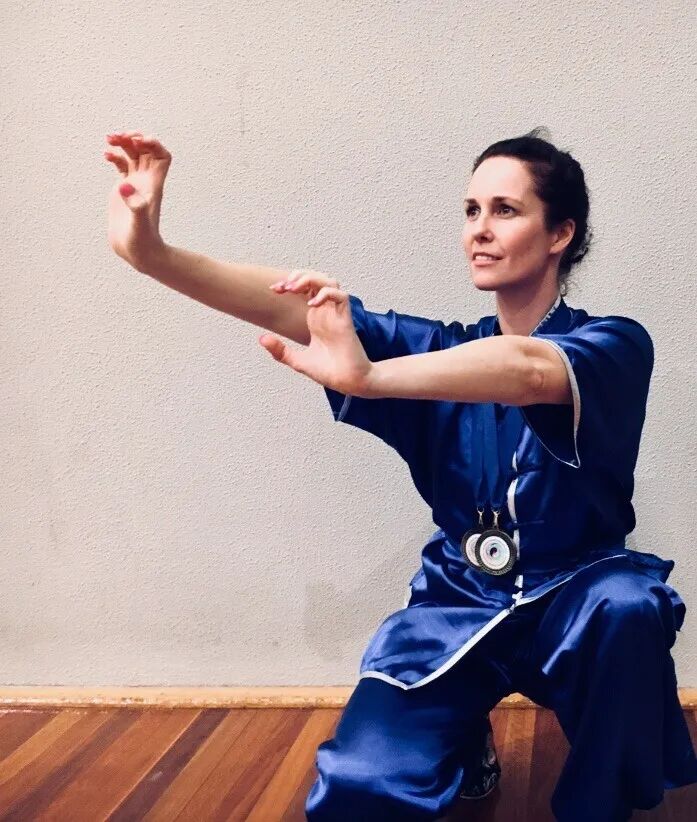
“My very first Australian Kungfu Championships was in 2014,” Rosemary continues, “and it was scary of course. I walked in with very little experience and a lot of nerves. In fact, some of my own classmates told me not to compete because I ‘wasn’t good enough.’ Instead of discouraging me, it lit a fire in me. I’ve always been the type of person who, when told I can’t do something, becomes absolutely determined to prove otherwise. Every time someone doubted my abilities or made me feel out of place, they unintentionally became my personal motivators—nothing lights a fire like someone underestimating you.”
“Competing taught me resilience,” Rosemary says, “discipline, and that the biggest transformation often happens precisely when other people doubt you. Over the years, that determination paid off. I went on to win multiple gold medals at the Australian Kungfu Championships in the years that followed. My specialties became barehand forms and broadsword, but it was the sword events that truly became my signature. There is a power and rhythm in the sword routines that suits me perfectly, and I found myself continually improving at each national event.”
Balancing her gold medals, Rosemary discovered there was also a paradoxical reward in failure. “Of course, every performance has had its faults,” she says. “I’ve had routines where I blanked, dropped a weapon, and often came off the floor feeling I could have done better. But those “failures” were some of my biggest teachers; they showed me exactly where I needed to grow. One thing I’ve learned as an athlete is that we often don’t need anyone else to tell us where we fell short. When you truly know yourself, as so many high achievers do, you’re already aware of every weakness and every place you need to improve. I’m my own toughest critic; watching videos of myself is almost impossible, because I instantly spot every flaw. But here’s the truth -- acknowledging those flaws is exactly what pushes us forward. It is how we evolve. It is how we turn self-awareness into strength, and imperfection into progress.”
Oceana Gold
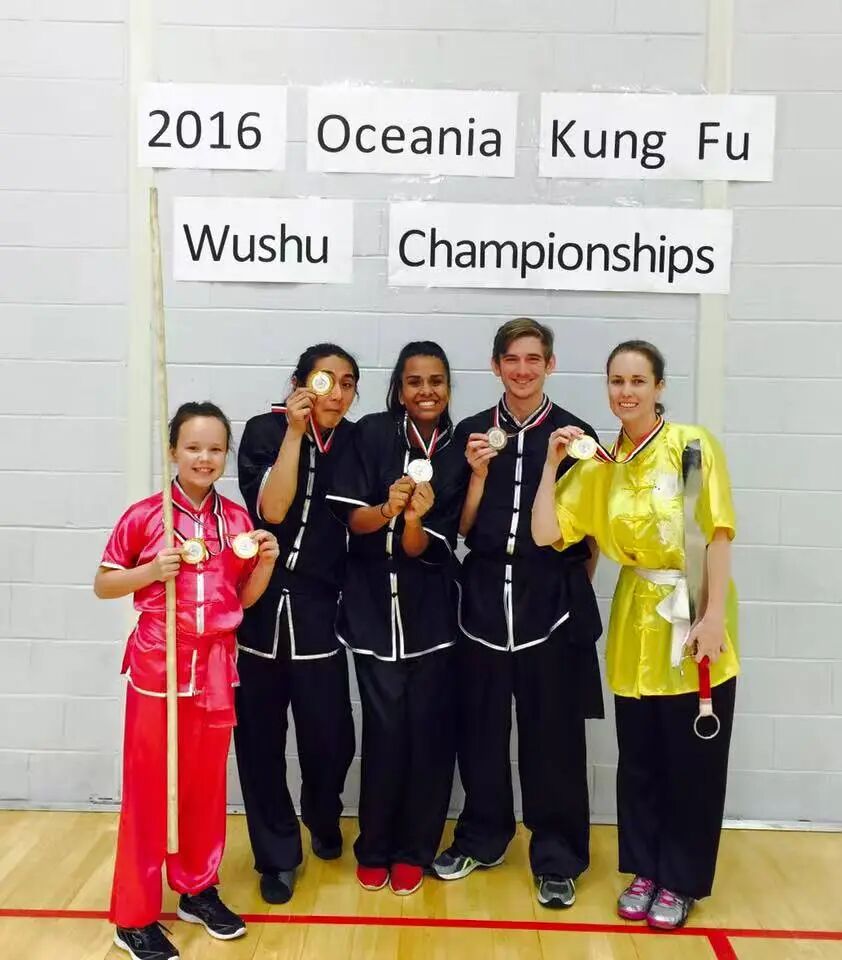
Rosemary would continue her journey and foray into the continental arena, where her identity as a champion would level up. “Winning five gold medals at the 2016 and 2018 Oceania Kungfu Wushu Championships was the beginning of another journey, and I began enjoying the experiences of competing. The continental level is slightly different from the nationalnational competition; it has a bigger atmosphere, and a wider range of athletes.”
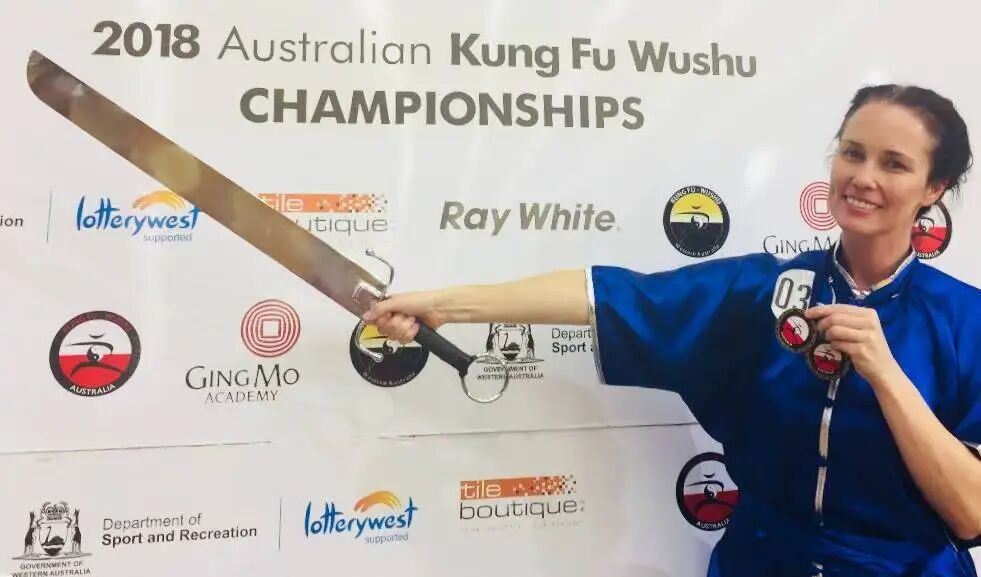
“Oceania means you might be sharing the floor with athletes from New Zealand, the Pacific Islands, and other neighbouring regions,” Rosemary adds. “You see new styles, different interpretations, and a broader range of skill. And that’s exactly what you want as a martial artist: more challenge, more diversity, more progress. Nearly a decade later, I’ve watched the landscape expand… slow but steady. It’s exciting and a privilege to watch a sport evolve.”
A Magical Kungfu Journey to China -- The World Kungfu Championships
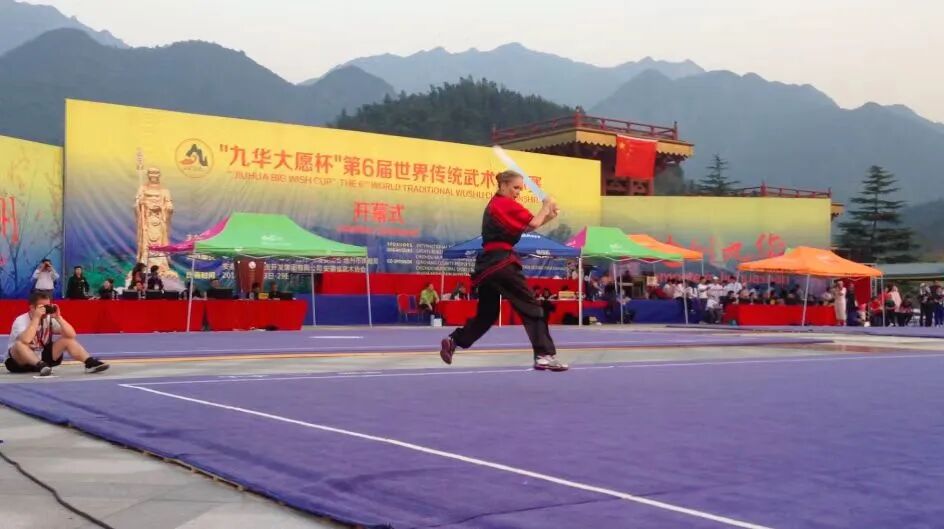
In 2014 Rosemary’s competitive blossoming led to her first World Kungfu Championships adventure. It became more of an odyssey, as she would go on to compete in five WKFC events between 2014-2025. “My first World Kungfu Championships in 2014 (in Chizhou) was unforgettable,” she recalls. “The competition was outdoors on a hot, balmy evening, with the sun setting behind the mountains, a massive Buddha in the background, and all the world flags gently blowing in the breeze—the magic of that first competition has never left me. Walking into such a massive international event for the first time felt surreal, surrounded by athletes from all over the world. It was intimidating, exhilarating but also deeply inspiring. And I came home with a second prize and a third prize and was utterly over the moon that I had even placed.”

“Each trip to China has been different,” muses Rosemary, “travelling with new teammates, forming friendships, and learning to manage not just my fitness and focus, but jetlag, the crowds, cameras, and nerves.” She also feels that competing on an international stage adds another layer of pressure. “There are hundreds of spectators,” she says, “the event is broadcast globally, and that is such a stark contrast from your small training space at home. No matter how experienced you are, that moment when you step onto the carpet always sends a rush through your whole body.”
“And speaking of the carpet,” she adds, “--that might be the hardest part! I’ve spent most of my training life on wooden floors or mats. The competition carpet is beautiful, but it’s a whole different experience under your feet. Every time, I have a tiny fear that I’ll do a spectacular fall right in front of the cameras. Thankfully, I’ve managed to avoid any accidental faceplants so far!”
But, Rosemary adds, despite the nerves, the WKFC events have been some of the most rewarding experiences of her martial arts journey. “They push you to persevere, to adapt, and to rise to a level you didn’t know you had in you. And I treasure my moments travelling with Australian team members.”
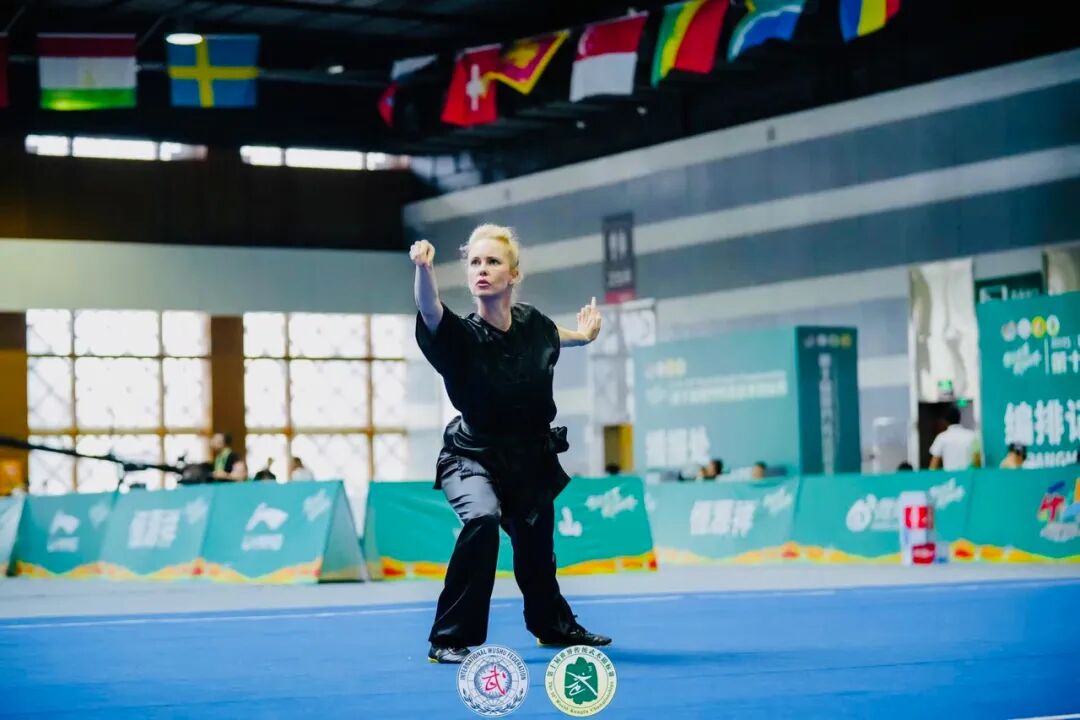
Recently this year Rosemary returned to Emeishan for the 10th World Kungfu Championships and won a frist prize – a career milestone – in Shaolinquan. “This was an absolute career milestone,” she says. “I’ve mostly competed in nanquan and nandao, but the Shaolinquan I performed offered a mix of slow, deliberate moves and fast, explosive sequences. Learning new forms under pressure is wonderful and the moment you finally start to master them, even better.”

Rosemary describes her experience. “I was surprisingly relaxed for Shaolinquan. Expecting to do better in my jian, I felt less pressure and could give everything to this form. Ironically, nerves got the better of me in the broadsword, showing that sometimes letting go is key to performing your best.”
“When others told me I had placed first, I didn’t even believe them at first!” she says. “After the initial shock, I cried tears of joy. Eleven years of competitions, dedication, and perseverance culminated in the ultimate reward. Winning gold at the World Championships is transformative! It is a dream realized, a pinnacle of effort, and a reminder of why I fell in love with kungfu. It genuinely has been one of the best feelings ever! Watching the incredible speed, agility, and aerial feats of fellow athletes was inspiring and humbling. Competing at this level encourages you to grow, adapt, and give everything you have - both on and off the floor. Life feels pretty good with a shiny first prize medal in my suitcase!”
Australian Wushu Journey – Lifelong Friends
“Over the years,” Rosemary says, “I’ve had the privilege of meeting and getting to know many Australian and international wushu athletes. You see the same faces at competitions, wait in line to compete, travel on buses, and spend hours together training and observing. Over time, these shared experiences build friendships and I have a particular fondness of some of the Sydney and Brisbane athletes and coaches who have become lifelong friends.”

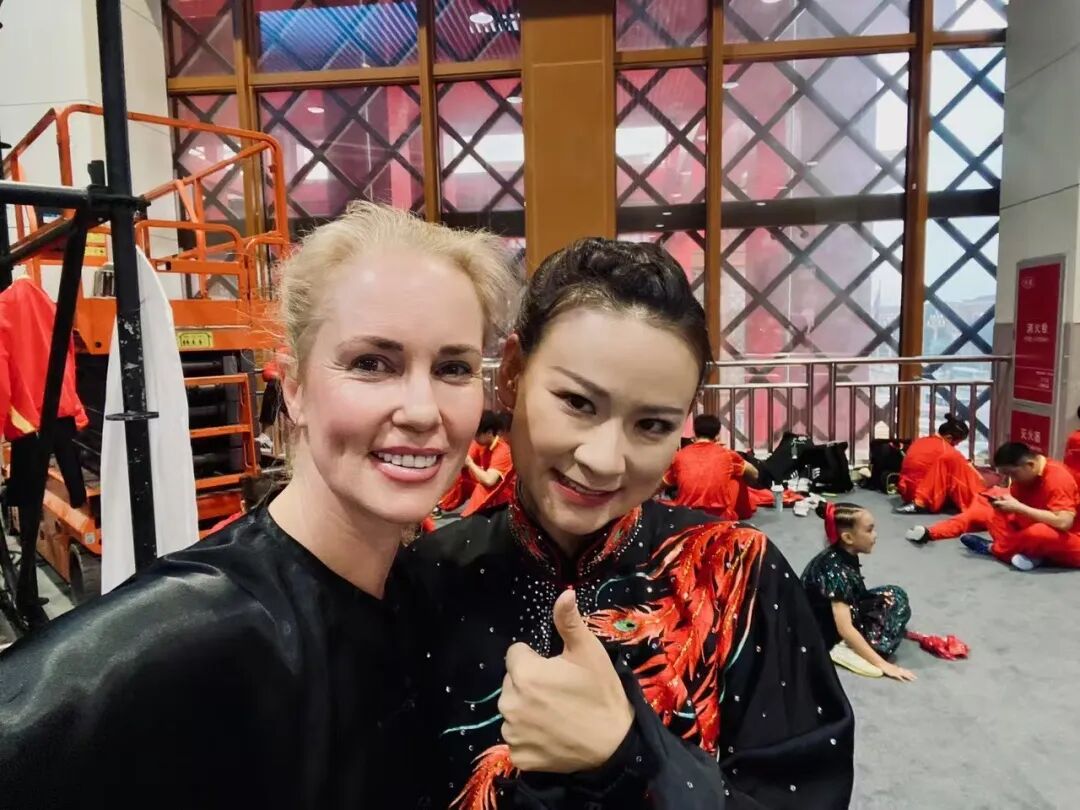
“Being part of the Australian Wushu team is a unique experience,” she adds. “Traveling together, supporting each other, and sharing both the challenges and the excitement of competition creates a strong sense of camaraderie. These friendships often extend beyond the mats, and we keep in touch through training, social media, and regular catch-ups whenever possible. It’s a wonderful community to be part of, and it makes the journey even more meaningful.”
“Most of my training has taken place at Golden Lion Academy in Melbourne, Australia,” Rosemary says, “under the guidance of my knowledgeable teachers and coaches. Sometimes they push me hard, sometimes we consolidate skills and of course, we’re always going back over the basics. I typically train three to four classes a week, and I complement this with other strength and cardio based exercise, aiming to stay active most days. Stuck mostly at a computer for work, I love nothing more than having extra time to stretch. Over time, I’ve learned that consistency is key - just keep showing up, even when life is busy, is what drives improvement. For bigger events, I focus on refining specific forms, and making time to practice under conditions similar to competition to ensure I’m prepared both physically and mentally.”
“Life is busy,” Rosemary adds, “and competing at wushu events means juggling work, parenting, study, injuries, and daily responsibilities, all the while, trying to improve in a sport you love. Over time, I’ve learned to create a schedule that works for me, one that balances training, recovery, and constant competing demands. You become very in tune with your body—its strengths, weaknesses, and the ways it needs to move and change. Some weeks you push for fitness, speed, and strength; other weeks you step back to recover from injury or simply life’s pressures. It’s a delicate balancing act, but it teaches patience, self-compassion, and perseverance.
“Traveling to international competitions adds another layer—booking trips, managing logistics, and packing everything you need for your own performance and comfort. Navigating these challenges has honed my diligence and ability to perform under pressure, both on and off the floor. You learn to develop both as an athlete but also in everyday adaptability and resilience.”
“Outside of wushu,” says Rosemary, “I juggle a busy life—working, studying, serving on community committees, fostering children and being a parent. Balancing all of this with my kungfu practice takes considerable planning, consistency, and a commitment to self-care so I don’t burn out. I make time for activities that recharge me, whether that’s sipping coffee in a caféin solitude, going for long walks, or water skiing in summer. Finding these moments of balance helps me stay energized, focused, and able to give my best to both my family, community and my sport. Consistency has been crucial. Even in a busy year of work, parenting, and completing two university degrees this year and moving into an entirely new career as a lawyer, I always showed up to train. Small, steady efforts of movement, maintaining fitness, moving forward, it all adds up, even if it doesn’t feel like it is. If it’s cold, turn up. If it’s windy, raining, you’re tired or busy, just turn up. It takes an hour of your day… just do something to keep your body supple and moving.”
Wushu Challenges & Rewards
We asked Rosemary what is the biggest obstacle or challenge she’s had to overcome in her kungfu career? And what’s the best part? She replies thoughtfully, “One of the biggest challenges in my kungfu career has been balancing the reality of starting later in life with the ambition to excel. I’ve faced injuries, busy life commitments, and the ongoing challenge of keeping motivation high. But I firmly believe that you are never too old, and it’s never too late, to start a sport—and to be good at it. Overcoming these obstacles has taught me strength, patience, and the importance of consistency, and it has made every achievement even more meaningful.”"
She adds, “The best part of being a kungfu athlete is the art of perfecting something over time. There’s a deep satisfaction in gradually improving—whether it’s moving faster, lowering your stance, or finally mastering a complex form that has taken weeks or months to memorise. My most rewarding experiences come from these moments of growth, when effort, persistence, and focus come together to create something you’re happy with. It’s a constant reminder that kungfu isn’t just about competition—it’s about self-improvement, discipline, and the art of progress.”
Wushu Philosophy
“Of course,” Rosemary says, “many of us wish we had started younger, been more flexible earlier, or trained harder but life doesn’t always work out that way. The beauty of wushu is that it can be adapted to suit every stage of life and level of fitness. It’s never too late to begin, and it’s never too late to shine. I see people say “I’m too old” even at 25, or at 50—but age is just a number.
“My philosophy is simple: just begin. Embrace the sport, enjoy the journey, and work around your weaknesses. Training, competing, and learning new disciplines as an older athlete teaches patience, persistence, and self-compassion. By showing that wushu is truly for everyone—young or old, beginner or master—I hope to encourage others to take that first step, stay consistent, and discover the joy and personal evolution that martial arts bring.”
“I also hope,” she says, “that by prioritizing exercise, health, and staying active, I can be the best mum I can be and inspire my children. All of them have practiced kung fu at some point, and I’ve always believed that leading by example is one of the most important lessons a parent can give. Sport has been a part of my life for as long as I can remember, and I want them to see that it’s possible to balance family, life, and fitness. I want my children to learn new things, grow and be respectful, confident humans with good discipline, good hearts and good health.
We asked Rosemary what her goals are for the future, and what does she still want to achieve in the sport of kungfu? She answers, “Kungfu has transformed my life physically, mentally, and emotionally. Your body gets bruised, your ego gets bruised, and yet you must keep going. My philosophy is simple: show up, stay committed, embrace the challenge, and have a growth mindset. Motivation comes and goes, but the real progress comes from riding the waves, learning from setbacks, and keeping momentum even when it feels too hard.”
“When I first joined my club, female participants were few; often I was the only girl in class. Now the numbers are more even and it shows that kungfu and sport in general can welcome everyone. Barriers can be broken and transformation happens when people are given the opportunity and feel welcome.”
“Kungfu has also taught me the value of resilience. You will fail, sometimes repeatedly, but each fall is a lesson. My goal for the future is to keep evolving as an athlete, to inspire others—especially women, to take up sport, and to leave a legacy of courage, determination, and the belief that you can overcome any challenge.”
And in particular, she adds, “I would also love to contribute as an ambassador for women’s sport, encouraging women to engage in physical activity and wushu at all ages, even amidst busy lives, families, and careers. Wushu has shown me that it’s possible to make time for yourself, stay active, and become stronger, no matter how full your schedule. I hope to inspire women to discover the confidence, enjoyment and even power that comes from keeping sport and movement as part of their everyday lives.”
Rosemary reflects with her final thoughts on kungfu’s life lessons. “What I have learned,” she says, “is that no coach, judge, crowd or any other person, can create the champion inside you. They can guide you, sharpen you, and push you — but the true power has to be self-made. Greatness isn’t gifted; it’s worked for. It’s the quiet decision to rise after every setback, to keep going long after motivation fades and to walk the path even when no one is watching.”
“Kungfu has shown me that everything you need is already within you - courage, discipline, tenacity, steely ambition. Your coaches light the way, but you alone are the one who must take each step. That quiet determination, that inner grit…. is what transforms a person into an athlete - and an athlete into something extraordinary.